



Automation of Stamping Lines – An Irreversible Trend
In the context of Industry 4.0, automation of stamping lines is no longer an option but a necessity for businesses to enhance competitiveness and adapt to the market. This article will delve into the overview, benefits, applications, and development trends of automation of stamping lines.
Overview of Automation of Stamping Lines
What is a stamping line and the role of automation
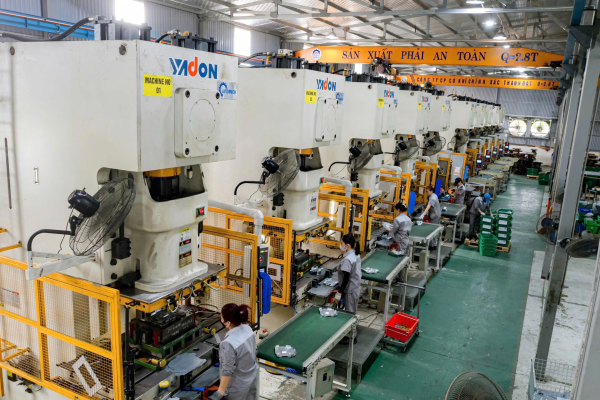
A stamping line is a system of machines and equipment linked together to perform different stamping operations, creating metal products as required. This process typically includes operations such as cutting, bending, forming, and punching.
Automation of stamping lines plays a key role in:
- Increasing production speed: Minimizing waiting time between operations.
- Enhancing accuracy: Ensuring uniform product quality.
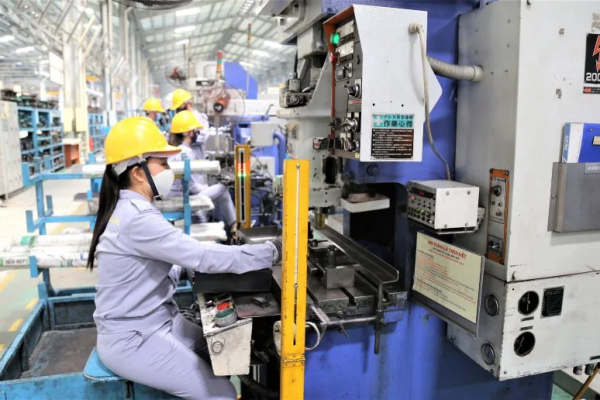
- Minimizing the risk of workplace accidents: Replacing humans in heavy and dangerous tasks.
- Optimizing costs: Reducing waste of materials and labor costs.
The main components in an automated stamping line
A typical automated stamping line includes the following components:
- Stamping machine: Performs various stamping operations.
- Automatic blank feeding system: Ensures blanks are supplied continuously and accurately.
- Industrial robots: Perform tasks of picking, placing, and moving blanks between stamping machines.
- Control system: Controls and monitors the entire operation of the line.
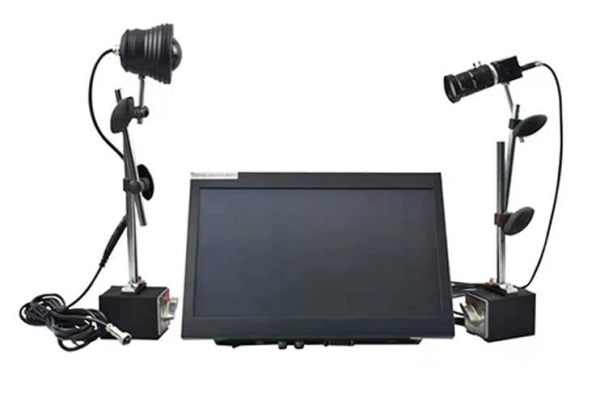
- Sensors and inspection system: Detects errors and ensures product quality.
Benefits of Automation of Stamping Lines
Improving productivity and production efficiency [1, 6, 7]
Automation of stamping lines brings significant improvements in productivity and production efficiency:
- Increasing production speed: The line operates continuously, uninterrupted by subjective factors.
- Reducing production cycle time: Operations are performed simultaneously and quickly.
- Increasing output: Production capacity increases significantly compared to manual methods.
Improving product quality and reducing errors [7, 14]
Automation helps improve product quality and reduce errors thanks to:
- High accuracy: Machines and robots operate according to pre-programmed programs.
- Stability: Products have consistent quality, less affected by human factors.
- Reducing scrap: The inspection system detects errors early and prevents mass production of defective products.
Reducing labor and operating costs [6, 7, 9]
Automation of stamping lines helps businesses save significant costs:
- Reducing labor costs: Replacing manual labor with machines and robots.
- Reducing operating costs: Optimizing the use of energy and materials.
- Reducing maintenance costs: Automated systems are durable and less prone to problems.
Applications of Automation in Stamping Lines
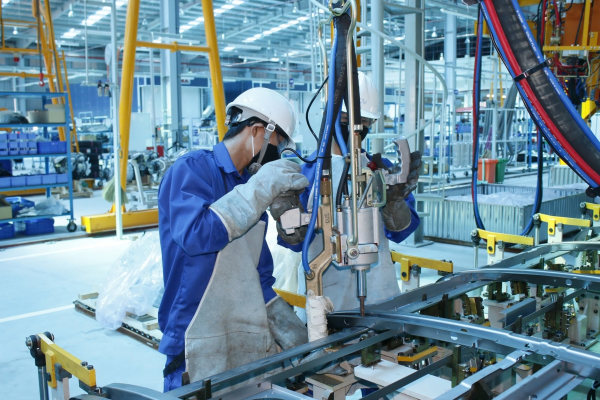
Applications in the automotive industry [4, 12]
In the automotive industry, automation of stamping lines is widely used to produce parts such as:
- Car frames
- Car bodies
- Doors
- Hoods
Applications in electronics manufacturing [3, 4]
In the electronics manufacturing industry, automation is applied to produce:
- Computer cases
- Phone cases
- Electronic components
Other applications (mechanical processing, parts manufacturing...) [3, 12]
In addition, automation of stamping lines is also applied in many other fields such as:
- Mechanical processing
- Parts manufacturing
- Household appliance production
Development Trends of Automation of Stamping Lines
Using robots and intelligent control systems [1, 20]
The current trend is to use industrial robots with high flexibility and accuracy, combined with intelligent control systems to optimize the production process.
Integrating IoT and big data analytics [8, 11, 17]
Integrating IoT (Internet of Things) and big data analytics helps collect and analyze data from the production line, thereby making optimal decisions and improving performance.
Developing flexible and customized automation solutions [4, 8]
Businesses increasingly demand flexible and customized automation solutions that can be easily adjusted to meet different production requirements. These systems can quickly switch between different product lines, meeting the diverse needs of the market. This requires solution providers to continuously innovate and develop new technologies to meet the increasingly high demands of customers.